CONFERENZA – BIBLIOTHECA ORIENTALIS ATTILIO PETRUCCIOLI DI FOLIGNO
GIUSEPPE STRAPPA.
MATERIA SIGNATA Alle origini del mondo costruito
Tel. 0742 340 495 | e mail: info@jacobilli.it | sito: www.jacobilli.it |
Si potrà seguire la diretta streaming dell iniziativa accedendo al canale You Tube della biblioteca attraverso il seguente link:
https://youtube.com/live/A49UEHkf_0I
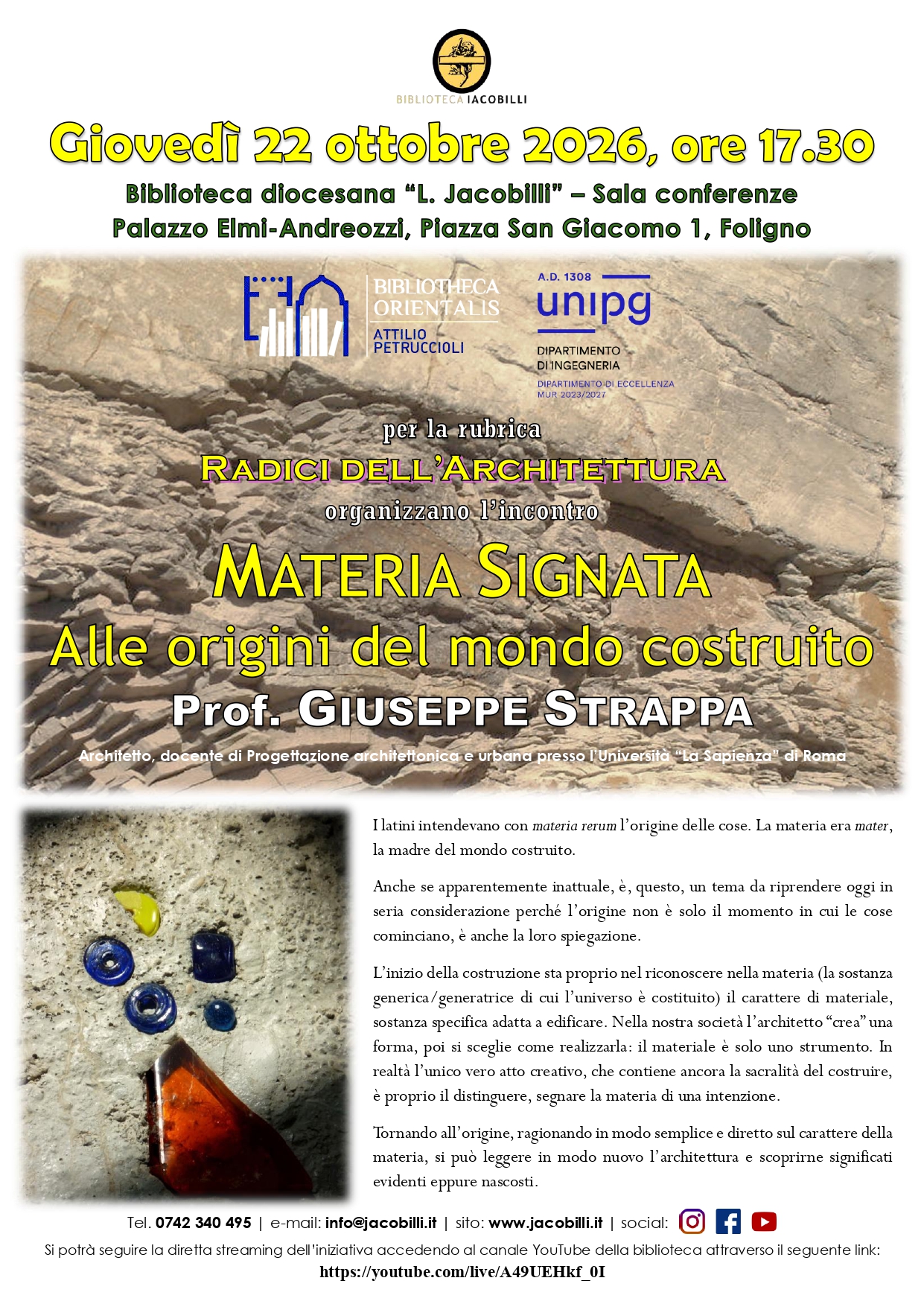 I latini intendevano con materia rerum l’origine delle cose. La materia era mater, la madre del mondo costruito. Anche se apparentemente inattuale, è, questo, un tema da riprendere oggi in seria considerazione perché l origine non è solo il momento in cui le cose cominciano, è anche la loro spiegazione. L’inizio della costruzione sta proprio nel riconoscere nella materia (la sostanza generica/generatrice di cui l’universo è costituito) il carattere di materiale, sostanza specifica adatta a edificare. Nella nostra società l’architetto “crea” una forma, poi si sceglie come realizzarla: il materiale è solo uno strumento. In realtà l’unico vero atto creativo, che contiene ancora la sacralità del costruire, è proprio saper distinguere il materiale, segnare la materia di una intenzione. Tornando all’origine, ragionando in modo semplice e diretto sul carattere della materia, si può leggere in modo nuovo l’architettura e scoprirne significati evidenti eppure nascosti.